



Zoo Zone
Meet the Animals in our Zoo Zone - More details about each animal are coming soon!
Iguanas
Basil
Green Iguana
Scientific Name: Iguana iguana
--
Meet Basil, our sweet green iguana 💚 (and our biggest Denver Broncos fan 🧡💙 ).
Basil is about 8 years old and came to The Science Zone in 2018 after Casper PD brought him to us. He had escaped his previous home and was found on the street after being attacked by a dog, leaving him with scars and nerve damage in his tail. Basil also has Metabolic Bone Disease, which is why he can’t fully close his mouth and often relaxes with his tongue sticking out. Our team works hard every day to give him a happy, comfortable life.
Basil has grown into an incredibly affectionate and friendly iguana. He loves baths, snuggling with people he loves, and lounging on his favorite driftwood. He never skips a meal, blueberries are his favorite right now! 🫐
Basil is the sweetest and friendliest iguana you will ever meet!
Smaug
Red Iguana
Scientific Name: Iguana iguana
Fun Iguana Facts
🐊 Iguanas have 80-120 small, sharp, serrated teeth. They are Pleurodont, which means their teeth are fused by their sides and are attached to the inner jawbone. Their teeth are shed and replaced throughout their lives. Their new teeth grow in as old ones fall out. They use them to shred plant material into smaller pieces that they can swallow, as they are herbivores.
🐊 They use their tails for balance, swimming, and defense. Iguanas often use their tails as a defense mechanism by whipping predators with them. They are capable of a process known as caudal autonomy, which means they can drop their tail as a defense mechanism. Their tails are super strong and can grow up to 3-4 feet in length, making up half of their body length!
🐊 Iguanas communicate through head bobs, body movements, and dewlap displays(the flap of skin that hangs from their chin.
🐊 They are excellent swimmers and can hold their breath underwater for up to 30 minutes!
🐊 Iguanas have a third eye, which they use to sense shadows and predators; this is called a parietal eye. This sensor detects light levels, and it is even used for hormone regulation.
🐊 Iguanas love to climb and can leap considerable distances. They can survive falls from up to 40 or 50 feet!
🐊 They can grow up to 6 feet in length!
Arachnids
Charlie
Chaco Golden Knee Tarantula
Scientific Name: Grammostola pulchripes
--
🕷️Say hello to Charlie, our beautiful Chaco Golden Knee Tarantula! Named after the Gran Chaco region of South America, where her species is native, Charlie has been part of our family since 2016, and she’s been thriving ever since. 🩷
🌎 Native to: The Gran Chaco region (Argentina & Paraguay)
🏠 Lifestyle: Terrestrial (she loves life on the ground and burrowing!)
⌛Lifespan: Females can live an impressive 20–25 years (Charlie is about 16!), while males typically live 5–10 years.
🍽️ Diet: Charlie enjoys crickets and mealworms.
Despite her spooky reputation, Charlie is a calm, sweet ambassador who loves to explore and helps us show visitors just how incredible arachnids really are. Next time you’re here, stop by and say hello! 💖
Fun Arachnid Facts
🕷️ Even though spiders have 8 eyes, they don’t see very well! Instead, sensitive hairs on their legs help them “see” by detecting vibrations.
🕷️ When stressed, they can kick tiny urticating hairs from their abdomen as a defense. These hairs can cause itchiness or a rash, but don’t worry, Charlie and Chérie's species is known for being extremely docile and rarely uses this defense.
🕷️ Charlie recently molted! Adult tarantulas usually molt only once a year (or even every other year).
🕷️ In the wild, they help plants thrive by eating pests, aerating soil, and recycling organic material as they burrow.
Lizards
Simon
Leopard Gecko
Scientific Name: Eublepharis macularius
Lady
Leopard Gecko
Scientific Name: Eublepharis macularius
Sticky
Crested Gecko
Scientific Name: Correlophus ciliatus
--
🦎 Say Hi to Sticky, our super silly crested gecko! Sticky joined The Science Zone in 2024 after coming from a very loving home that just couldn’t give him the attention he deserved, and now he’s part of our animal family. 💛
Sticky is missing his tail, something crested geckos can lose when they’re stressed (they can’t grow it back!). This is affectionately called a “frog butt.” In Sticky’s case, a curious cat caused a little too much stress at his previous home.
Crested geckos are native to just one island, New Caledonia, and are severely endangered in the wild. In fact, there are now more crested geckos in captivity than in the wild, which is why conservation, education, and appreciation are so important. 🌍
Sticky is a bit of a daredevil and loves to jump right out of hands! He’s an omnivore, munching on plants and insects, but his absolute favorite food is bananas. 🍌😄
Ozzie
Central Bearded Dragon
Scientific Name: Pogona vitticeps
--
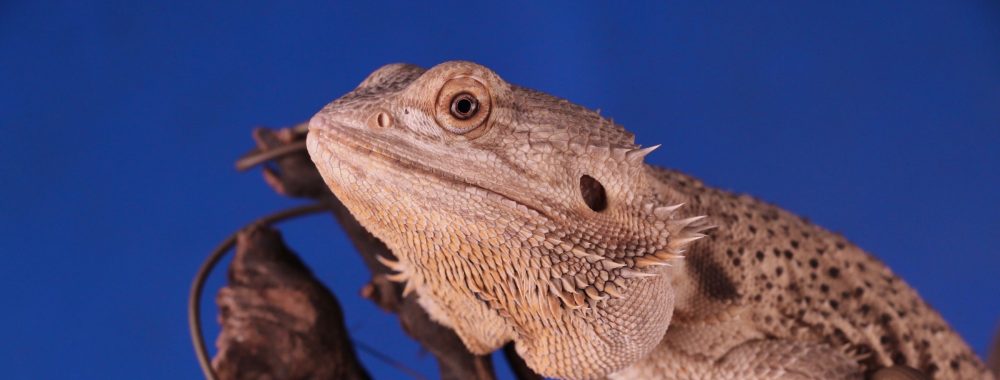
🦎 Meet Ozzie, one of our stars of the show at The Science Zone! Ozzie is a 9 year old, Male, Central bearded dragon with a personality as big as his appetite. Since joining us in 2023, Ozzie has become a staple Zoo Zone ambassador. Here's everything you need to know about our scaly friend and his species.
🌟 Meet the resident explorer himself:
Ozzie isn't one to sit around and wait all day! He is an explorative dragon who loves to see what's going on around him. On slower days at The Science Zone, you might even see him out for a stroll. He's leash trained and loves to go on walks to stretch his legs!
🥗 Diet: "Salad? No thanks."
While Bearded dragons are omnivores (meaning they eat both plants and meat), Ozzie definitely has a preference.
Favorite Food: Crickets
The struggle: He will often completely ignore his healthy salad if he knows there's a chance to hunt crunchy crickets instead.
🧔♂️ Why the "Beard"?
You might wonder how these animals got such a cool name - It all comes down to their unique defense mechanism. When a bearded dragon feels threatened, they can puff out the loose skin on their chin, also known as their "beard". They also can change the color of this beard to a deep black, making them look much larger and scarier to potential predators!
🏃➡️Need for speed
Don't let Ozzie's chill attitude fool you. Bearded dragons are incredibly fast, able to run up to as fast as 9 mph in short bursts. The kicker: When they hit these high speeds, they often stand up and run solely on their back legs!
🌍Home Sweet Home:
While Ozzie lives with us now, his ancestors are from the wild arid regions of Australia. They are perfectly adapted for life in the heat, though Ozzie seems to prefer the climate-controlled life of a local celebrity here at The Science Zone!
Fun Lizard Facts
Geckos 🦎
🦎 They have no eyelids; instead, they have clear scales called eye caps. They use their tongues to lick their eyes clean.
🦎 They are arboreal, meaning they love to climb and live up high
🦎 Unlike most lizards, geckos make noises, including chirps, barks, and clicks.
🦎 Geckos have microscopic hairs called setae on their toes that allow them to stick to surfaces without liquid or suction.
🦎 Their eyes are roughly 350 times more sensitive to light than human eyes, allowing them to see color in near darkness.
Bearded Dragons 🐉
🐉 They can change from sandy brown to dark brown or black in minutes to adjust their body temperature or show emotion.
🐉 Bearded Dragons have a small, light-sensitive "parietal eye" on top of their head that detects predators (like birds) from above and helps regulate their sleeping cycles.
🐉 They wave! A common social behavior in which they stand on three legs and wave one front arm to show submission or to recognize other dragons.
🐉 Bearded dragons are not only fast runners (up to 9mph!), but they can even run on their back legs! The airflow helps them keep cool. They also gain a bit of speed this way.
🐉 When they are scared, Bearded Dragons puff out their beard as a defense mechanism to scare predators.
Turtles & Tortoises
Da Vinci
Ornate Box Turtle
Scientific Name: Terrapene ornata ornata
Soupy
Asian Leaf Turtle
Scientific Name: Cyclemys dentata
Frank
Amboina Box Turtle
Scientific Name: Cuora amboinensis
Sunshine
Russian Tortoise
Scientific Name: Testudo horsfieldii
--
🐢 Say hello to Sunshine, our lovable Russian tortoise here at The Science Zone! ☀️ He’s been part of our animal family since 2014 and is about 15 years old.
🌻 Get to know Sunshine:
• Loves to zoom around when he’s active 💨
• Enjoys going on classroom walks (yes, really!)
• Has a BIG dream of becoming a racecar driver 🏎️
• Even made a special appearance as an ambassador animal in the Summit Talent Show! 🎤
🥬 What’s on the menu?
Sunshine enjoys hay, greens, and the occasional fruits and veggies, a tasty mix for this happy guy!
🚀 Fun fact: In 1968, two Russian tortoises became the first vertebrates to orbit the moon and return safely. While Sunshine hasn’t made it to space (yet!), we think he’s pretty out-of-this-world already.💫
Be sure to say hi to Sunshine when you visit The Science Zone! 👋
Gilligan
Russian Tortoise
Scientific Name: Testudo horsfieldii
🐢 Fun Turtle & Tortoise Facts
🐢 Russian tortoises can dig tunnels up to 6 feet long to escape extreme desert heat and cold.
🐢 All tortoises are turtles, but not all turtles are tortoises!
🐢 Tortoises live on land and have sturdy, elephant-like legs, while turtles are built for swimming
Snakes
Gordon
Ball Python
Scientific Name: Python regius
--
Say hello to Gordon, our Ball Python (Python regius) here at The Science Zone! 🐍
Gordon is a beautiful banana morph and has been part of our animal family since 2019. He came to us when his previous owner was no longer able to provide the care he needed, and he now enjoys a comfortable home with us. 💚
Ball pythons are solitary animals, so Gordon has his own enclosure to keep him happy and healthy. 🏠
- Ball pythons are native to sub-Saharan Africa, where they live in savannas and grasslands.
🍽️ What does Gordon eat?
-Ball pythons are carnivores that eat small mammals and sometimes birds. They don’t chew their food, they swallow it whole!
Come visit Gordon when you visit The Science Zone!
Chase
Ball Python
Scientific Name: Python regius
--
🐍 ✨ Meet Chase, Our Ball Python! ✨ 🐍
Chase joined The Science Zone in April 2019 and has quickly become one of our favorite ambassador animals. He’s well-socialized, great with kids, and loves to explore his surroundings. Chase can be a little mischievous too; he once knocked a full snow cone off a table! 🍧
💫 Even with his playful antics, Chase is a sweet and curious snake that helps teach visitors all about the amazing world of reptiles.
Come say hi to Chase and learn all about these fascinating snakes! 🩵🐍
Kitt
Corn Snake
Scientific Name: Pantherophis guttatus
--
🐍 Meet Kitten (“Kitt”)!
Kitten, Kitt for short, is an 18-year-old corn snake who joined The Science Zone in 2023 after many years of being loved by her previous family. Kitt is an active and curious explorer! She loves to climb and is always on the lookout for small spaces to sneak into. 🙈
Corn snakes are a type of rat snake, sometimes called red rat snakes. They are constrictors, which means they wrap around their prey to subdue it. While some corn snakes may vibrate their tails as a defense mechanism, Kitt has never done this while in our care. 💛
They get their name from the checkered pattern on their bellies, which looks similar to maize (a type of Native American corn 🌽).
Come visit Kitt and see what she’s up to next! 👀 🐍
🐍 Fun Snake Facts
Ball Pythons
🐍 Ball Pythons are non-venomous constrictors that wrap tightly around their food before eating.
🐍 Their forked tongue helps them smell by collecting scent particles and sending them to a special organ called the Jacobson’s organ.
🐍 They usually grow 3–5 feet long, with females sometimes reaching up to 6 feet.
🐍 When threatened, they curl up into a ball—hence the name ball python!
🐍 Ball pythons are constrictors, meaning they use their strong muscles to subdue prey.
🐍 They have 100–150 small, sharp teeth.
🐍 They’re also called “Royal Pythons” because African chieftains once wore living pythons as jewelry.
Corn Snakes
🐍 Master Escape Artists - Corn snakes are notorious for finding tiny gaps to escape enclosures!
🐍 They are most active at night, spending the day hiding in logs, burrows, or abandoned buildings.
🐍 Corn snakes are solitary creatures. They spend most of their daytime underground in burrows or hiding under logs.
🐍 Since they are coldblooded animals, corn snakes enjoy basking in the sun to absorb heat.
🐍 Adult corn snakes will shed their skin to make room for new growth about every 3 months or so.
🐍 Corn snakes lack functional venom and help control populations of wild rodent pests that damage crops and spread disease.
Tucker & Bunsen
Tucker
African Sulcata Tortoise
Scientific Name: Centrochelys sulcata
--
🌟 Meet Tucker – Our African Sulcata Tortoise! 🐢
Tucker is our 17-year-old African Sulcata tortoise (also known as the African spurred tortoise) who joined The Science Zone in 2014 after his previous home realized just how BIG these gentle giants can grow! Sulcatas are the 3rd largest tortoise species in the world, reaching 20–30 inches long and up to 200 pounds, and they can live close to 100 years. Native to northern Africa along the edge of the Sahara Desert, they’re true desert survivors. Tucker’s personality is just like a dog; he loves shell scratches, chasing laser pointers, and his favorite snack is sweet potato. He lives with Bunsen the rabbit (they do race, and Tucker always wins 🏆).
And when the humans leave? We’ve heard a very silly rumor that Tucker secretly runs a tiny underground disco in his burrow, complete with glow-stick carrots and a strict “slow dancing only” policy. 🪩🐢
🥬 You can help feed Tucker on Tuesdays, Thursdays, and Saturdays! To keep him healthy, please only give him food purchased from the front desk.
Bunsen
Broken Color Mini Rex Rabbit (A sub-breed of the European Rabbit)
Scientific Name: Oryctolagus cuniculus
--
Bun is a broken color Mini Rex rabbit who is about 4 years old and has been hopping around The Science Zone since 2023. Before joining us, he lived at P.I.C. in the vet science classroom, where he was already helping students learn about animal care.
Around the museum, Bunsen keeps busy with some very important hobbies like riding Tucker, challenging Tucker to races, and chewing on unsuspecting pant legs. If you visit, keep an eye on your clothes, you might become part of the fun! 🐢👖
🐇 Mini Rex rabbits (and their larger Rex relatives) are famous for their incredibly soft, velvety fur. Most rabbits have two types of fur: a soft undercoat and longer guard hairs that protect them. But Rex rabbits have a special natural genetic mutation that makes their fur grow straight outward instead of lying flat. Their guard hairs are the same length as the undercoat, which gives their fur that plush, velvety texture. ✨
Fun fact: “Rex” means “King” in French, so Mini Rex rabbits like Bunsen are basically mini kings of the rabbit world! 👑
🐢 Fun Facts About Our Favorite Besties! 🐰
African Sulcata Tortoises
🐢 African Sulcata Tortoises are the world's third-largest tortoise species and the largest mainland tortoise.
🐢 They often weigh over 100 pounds and live for 80–100+ years!
🐢 These "notorious escape artists" are powerful burrowers capable of digging through dirt, sand, and even damaging home foundations in search of moisture.
🐢 They are known to be intelligent, with a keen sense of smell to locate food and water.
🐢 African Sulcata Tortoises are immensely strong, muscular animals capable of pushing over heavy objects like furniture, wooden, and chain-link fences. Thankfully, Tucker is a sweetheart and uses his strength for good - carrying Bunsen around on his back!
European Rabbits
🐰 The European rabbit is the only wild species of rabbit that has been domesticated. All pet rabbit breeds, from fluffy Angoras to large Flemish Giants, are descendants of this species.
🐰 They mark their territory and possessions (including other rabbits) with a chin gland, a behavior known as "chinning".
🐰 They live in large colonies and dig extensive underground burrow systems called warrens, which can have many chambers and exits.
🐰 They can run at speeds of up to 25 mph and possess 360-degree vision to help spot predators.
🐰 When happy, they may perform a specialized, acrobatic jump called a "binky," which involves twists and kicks in the air.
Chérie's Story
Chérie is a female Chilean rose tarantula that was given to us in 2023 by her previous home. In her previous home Chérie was used to teach students about tarantulas. When the teacher retired, he wanted her to continue teaching people about this amazing creature. Chérie is used to teach people about this species in many events and is an amazing ambassador.
Visit her at The Science Zone to learn more!
Smaug's Story
Smaug is a male green iguana that was given to us in 2017 when his previous home wanted him to have a better life. He was a rescue when they got him, so we are unsure of how old he is. He is unable to close his mouth properly due to Metabolic Bone Disease (MBD) which is caused by nutrient deficiencies or improper setup from his previous homes. The Science Zone is working to manage his MBD and prevent it from worsening.
Visit him at The Science Zone to learn more!
Ozzie's Story
Ozzie is a male bearded dragon that was given to us in 2024 by his previous home. His previous home had volunteered at The Science Zone and felt that we were able to provide better care for him. He is a big healthy boy that is very food motivated and loves to paint with his poop. Due to his artistic ventures, he is often given baths to keep him clean.
Visit him at The Science Zone to learn more!
Simon's Story
Simon is a male leopard gecko that was given to us in 2022 by his previous home. The people in his previous home ended up moving and were unable to take him with. He was well loved in his previous home, which made him a little bigger than he should be. While Simon is a little on the heavier side, The Science Zone is working to get him to a healthy weight.
Visit him at The Science Zone to learn more!
Lady's Story
Lady is a female leopard gecko that was given to us in 2020 by her previous home. She was very well loved and taken care of in her previous home however, they felt that she could be better taken care of at The Science Zone. Occasionally Lady will lay eggs that are not fertile, these are called slugs. If you notice any yellow egg like things in her enclosure, they are most likely slugs.
Visit her at The Science Zone to learn more!
Mack's Story
Mack is a male leopard gecko that was given to us in 2015 by his previous home. Mack has dropped his tail many times which has caused his tail to look slightly strange. Even though leopard geckos can regrow their tail it grows back a little differently each time. The Science Zone has been working hard to keep Mack’s life relatively stress free to prevent him from continuing to drop his tail.
Visit him at The Science Zone to learn more!
Kelso's Story
Kelso is a male crested gecko that was given to us in 2023 by his previous home. His previous home felt that they were not giving him proper care and wanted to make sure that he was getting good care. Kelso was never handled in his previous home which has made him opposed to any handling by team members hear at The Science Zone.
Visit him at The Science Zone to learn more!
Da Vinci's Story
Da Vinci is a female ornate box turtle that was given to us in 2014 by her previous home. She was given to us with Leonardo the other ornate box turtle here at The Science Zone. She has some beak deformities due to vitamin deficiencies in her previous home. The Science Zone is working to get her beak into better shape by taking her to the vet for routine beak trimming.
Visit her at The Science Zone to learn more!
Leonardo's Story
Leonardo is a female ornate box turtle that was given to us in 2014 by her previous home. She was given to us with Da Vinci the other ornate box turtle here at The Science Zone. She has some beak deformities due to vitamin deficiencies in her previous home. The Science Zone is working to get her beak into better shape by taking her to the vet for routine beak trimming.
Visit her at The Science Zone to learn more!
Sunshine's Story
Sunshine is a male Russian tortoise that was given to us in 2014 by his previous home. His previous home felt that The Science Zone could provide him with better care and a good home to live out the rest of his life. Sunshine can be hard to find in his enclosure at times because he enjoys burrowing in his hides.
Visit him at The Science Zone to learn more!
Gilligan's Story
Gilligan is a male Russian tortoise that was given to us in 2012 by his previous home. When he came to us, he had a mate that he was housed with for many years who has sadly passed away since. His previous home wanted him to have a nice place to grow old in and felt that The Science Zone could give him that. We strive to help him live a long and happy life here.
Visit him at The Science Zone to learn more!
Soupy's Story
Soupy is a male Asian leaf turtle that was given to us in 2018 by his previous home. His previous home felt that he would receive better care here at The Science Zone. Despite his species being opportunistic feeders, he tends to make friends with fish instead of eating them when they are put into his tank.
Visit him at The Science Zone to learn more!
Frank's Story
Frank is an Amboina box turtle that was given to us 2023 by his previous home. After owning Frank for 20 years and a kid moving to go to college his previous home thought it might be better to find him a different home to live out the rest of his life. Frank came to us with slight shell rot which is caused by not being able to properly dry off. The Science Zone is working to treat the shell rot and prevent it from worsening.
Visit him at The Science Zone to learn more!
Gordan's Story
Gordon is a male ball python (banana morph) that was given to us in 2019 by his previous home. Due to medical issues his previous home was unable to give him proper care including housing. He was previously housed with Chase, the other ball python here at The Science Zone. Ball pythons are solitary animals, so they have been separated into their own enclosures for their comfort and safety.
Visit him at The Science Zone to learn more!
Kitt's Story
Kitt is a female corn snake that was given to us in 2023 by her previous home. She has had two previous homes with her last one having owned her for 8 years. When her previous owner went off to college the parents took on her care. They love Kitt very much and wanted to give her the very best life, so they brought her to The Science Zone where they still come to visit her.
Visit her at The Science Zone to learn more!
We love meeting new people!